

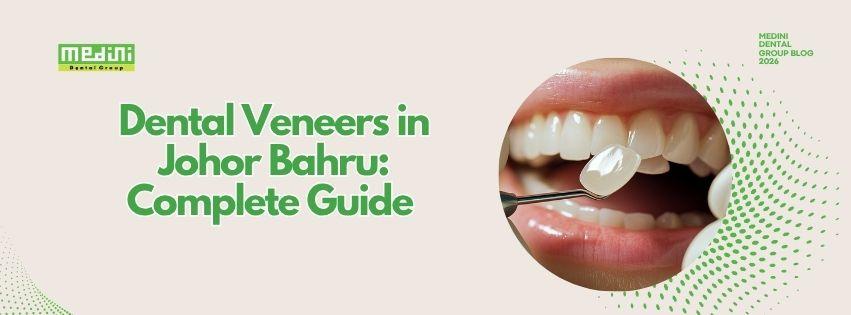
Dental Veneers in Johor Bahru: Complete Guide to Cost, Types, Benefits, Procedure and Results
A confident smile can change the way we present ourselves, communicate with others, and feel in everyday situations. When teeth are affected by discolouration, chips, uneven shapes, small gaps, or minor alignment concerns, dental veneers in Johor Bahru can provide a cosmetic solution designed around the individual smile.
Dental veneers are thin coverings placed over the visible surfaces of teeth to improve their colour, shape, size, and overall appearance. However, veneers are not simply a cosmetic coating that can be applied to every tooth. A proper assessment is essential because the condition of the teeth, gums, bite, enamel, oral hygiene, and the patient’s expectations all influence whether veneers are appropriate.
We have created this comprehensive guide to explain dental veneers in Johor Bahru, including the different types of veneers, the treatment process, expected costs, advantages and limitations, maintenance, alternatives, and important questions to ask before starting treatment.
What Are Dental Veneers?
Dental veneers are thin, custom-made restorations designed to cover the front surface of a tooth.
They can be used to improve several cosmetic characteristics, including:
- Tooth colour
- Tooth shape
- Tooth size
- Minor chips
- Small gaps between teeth
- Mildly uneven-looking teeth
- Certain forms of discolouration
- Teeth that appear worn or irregular
- Cosmetic imperfections that do not require extensive restorative treatment
A veneer is individually designed to complement the surrounding teeth and the patient’s facial appearance.
The objective is not simply to create extremely white teeth. A well-planned veneer treatment should create a smile that looks balanced, natural, and appropriate for the individual.
Dental Veneers in Johor Bahru: Who Are They Suitable For?
Veneers may be considered by adults who are unhappy with specific cosmetic characteristics of otherwise suitable teeth.
Common reasons patients explore veneers include:
1. Stained or Discoloured Teeth
Some types of tooth discolouration respond poorly to conventional whitening.
When whitening is unlikely to produce the desired result, veneers may be considered to change the visible colour of the tooth.
2. Chipped Teeth
Small chips can affect the symmetry of a smile. Depending on the size and location of the chip, a veneer may restore the visible shape of the tooth.
3. Uneven Tooth Shape
Some teeth naturally appear shorter, narrower, or irregular compared with neighbouring teeth.
Veneers can sometimes be used to create a more harmonious appearance.
4. Small Gaps
Small spaces between certain teeth may sometimes be improved with veneers.
However, veneers are not always the most conservative solution for spacing. Orthodontic treatment or other restorative options may be more appropriate depending on the cause and size of the gap.
5. Minor Cosmetic Irregularities
Veneers can address selected cosmetic imperfections when the underlying teeth are sufficiently healthy.
The important distinction is that veneers primarily address appearance. They do not automatically correct underlying dental disease or significant bite problems.
Types of Dental Veneers
There is no single type of veneer that is ideal for everyone. The appropriate material depends on factors such as the condition of the teeth, desired appearance, durability requirements, available space, bite, and treatment objectives.
Porcelain Veneers
Porcelain veneers are among the most established options for cosmetic smile treatment.
They are fabricated to closely resemble natural tooth structure and can provide excellent aesthetic results when properly designed and maintained.
Potential advantages include:
- Natural-looking appearance
- High aesthetic quality
- Good colour stability
- Customised shape and shade
- Resistance to staining compared with natural enamel
- Long-term cosmetic performance when properly maintained
Porcelain veneers generally involve laboratory fabrication after the dentist prepares and scans or takes impressions of the teeth.
Composite Veneers
Composite veneers use tooth-coloured resin material that is applied and shaped directly on the teeth or fabricated using a composite technique.
Potential advantages include:
- Often less expensive than porcelain
- Can sometimes require less tooth preparation
- Treatment can be completed more quickly
- Easier repair in certain situations
However, composite materials may be more susceptible to staining, chipping, and surface wear than porcelain.
The best option depends on the patient’s circumstances rather than price alone.
No-Prep or Minimal-Prep Veneers
The terms “no-prep” and “minimal-prep” are often used in cosmetic dentistry.
The concept is to preserve as much natural tooth structure as possible by reducing or eliminating tooth preparation where clinically appropriate.
However, no-prep veneers are not suitable for every patient.
Whether they can be used depends on the existing tooth position, tooth shape, enamel, bite, available space, and desired final result.
A treatment advertised as “no-prep” should still begin with a proper dental assessment.
Porcelain vs Composite Veneers
Understanding the difference between porcelain and composite veneers can help us make a more informed decision.
| Feature | Porcelain Veneers | Composite Veneers |
|---|---|---|
| Material | Dental ceramic/porcelain | Tooth-coloured composite resin |
| Appearance | Highly aesthetic | Can look natural when well crafted |
| Stain resistance | Generally high | Generally lower |
| Durability | Generally longer-lasting | Generally shorter-lasting |
| Repair | More complex | Often easier |
| Treatment time | Usually requires fabrication | Often faster |
| Cost | Usually higher | Usually lower |
| Customisation | Highly customised | Highly adjustable |
The “best” veneer is not necessarily the most expensive one.
Our recommendation should be based on the patient’s teeth, bite, expectations, lifestyle, and long-term treatment goals.
How Much Do Dental Veneers Cost in Johor Bahru?
The cost of dental veneers in Johor Bahru varies significantly depending on several factors.
These may include:
- Type of veneer
- Material selected
- Number of teeth treated
- Complexity of the case
- Laboratory involved
- Amount of tooth preparation required
- Existing dental conditions
- Additional treatments required
- Dentist’s experience and treatment planning
- Complexity of the bite
- Desired aesthetic characteristics
For this reason, a responsible veneer quotation should not be based solely on a generic “price per tooth” without examining the patient’s teeth.
Why Can Two Veneer Treatments Have Different Prices?
Two patients may both request eight veneers but require completely different treatment plans.
For example, one patient may have:
- Healthy teeth
- Healthy gums
- Stable bite
- Minimal preparation required
Another patient may have:
- Existing fillings
- Gum inflammation
- Severe staining
- Tooth wear
- Crowding
- Bite problems
The second case may require additional treatment before veneers can be considered.
This is why a consultation is an important part of determining the actual cost.
What Is Included in a Veneer Consultation?
A comprehensive cosmetic consultation should look beyond the appearance of the front teeth.
We should evaluate:
Teeth
The dentist may assess:
- Tooth structure
- Existing fillings
- Cracks
- Decay
- Tooth wear
- Previous restorations
- Enamel condition
Gums
Healthy gums are essential for a successful cosmetic result.
Inflamed, bleeding, or unhealthy gums should generally be addressed before proceeding with elective cosmetic treatment.
Bite
The way the upper and lower teeth meet can affect veneer design and longevity.
Patients who grind or clench their teeth may require additional consideration.
Smile Design
A cosmetic assessment can consider:
- Tooth proportions
- Tooth width and height
- Smile line
- Gum display
- Facial proportions
- Midline
- Tooth colour
- Shape of neighbouring teeth
- Overall symmetry
The goal is to design teeth that complement the entire smile rather than treating each tooth independently.


